Process — Every Wall
Five wall art pieces in five completely different rooms, joined into one continuous walk. The camera passes through each wall into the next, so the range reads as one argument.
The brief
The showroom carries wall art in every register: molten abstracts, white relief, a hand-coloured map, gold leaf, graphic monochrome. Shown as a row of product tiles it looks like an inventory. The brief was to make the breadth feel like taste.
It also had to carry a seasonal offer without turning into a sale flyer. The fall event card arrives only after the work has done its job.
The idea
Match the piece to the room, not the brand.
Each piece gets the room it would actually hang in: a dark lounge, a bright family room, a study, a navy sitting room, a minimal penthouse. Viewers stop seeing a collection and start seeing their own wall.
Rather than cutting, the camera moves through the architecture, past a column or a doorframe, and emerges in the next room. Five rooms play as one take.
The cut
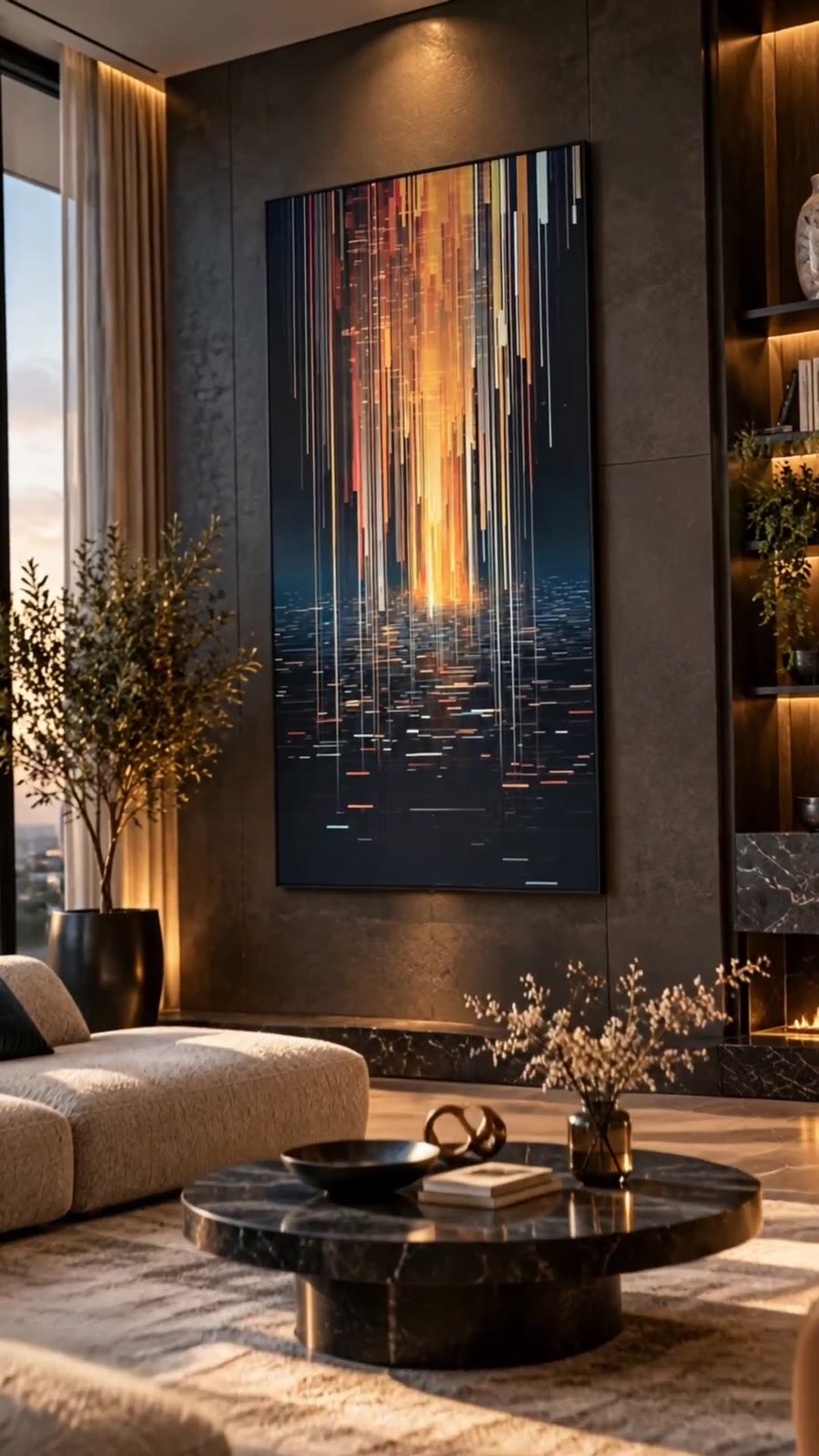
A tall molten-amber abstract in a stone-and-walnut lounge, lit from above. The camera tilts in until the streaks fill the frame. It's the boldest piece, so it goes first.
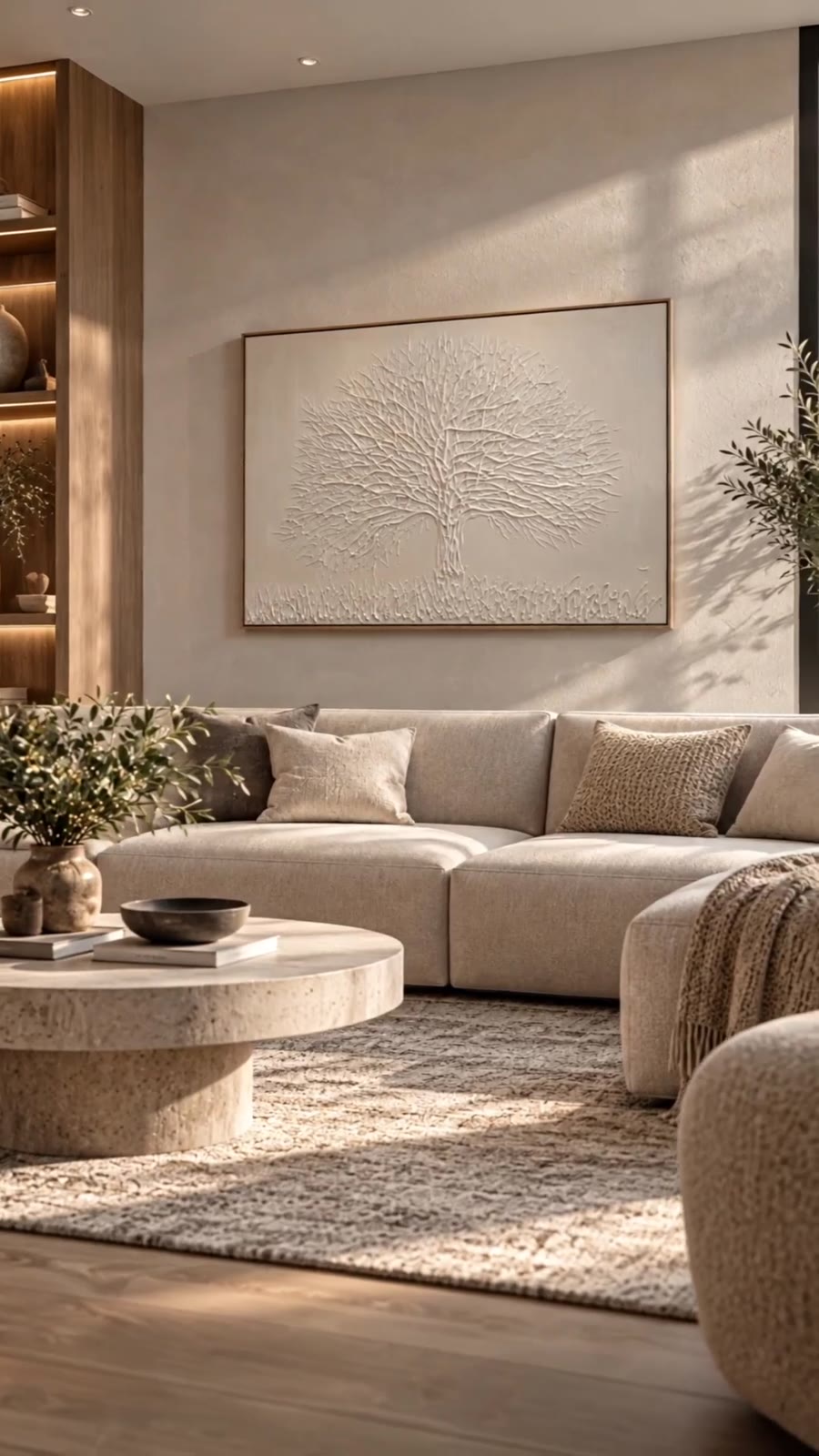
Straight from dark to bright: a white-on-white relief tree above a linen sofa. Nothing could be further from the opener, and that's the point of the cut.
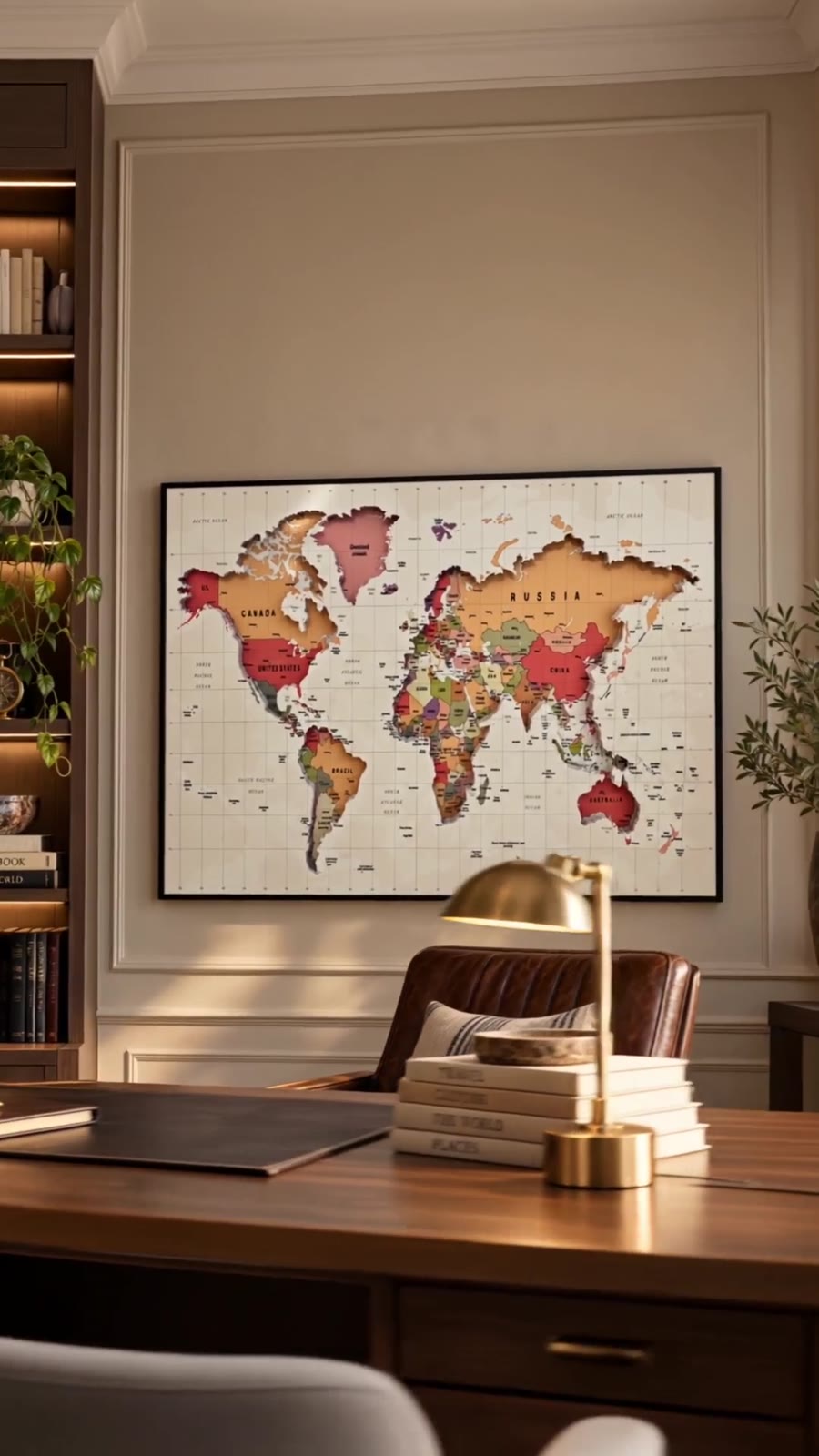
A hand-coloured world map over a walnut desk and leather chair. It's the first piece that implies who lives here, and it widens the audience past décor buyers.
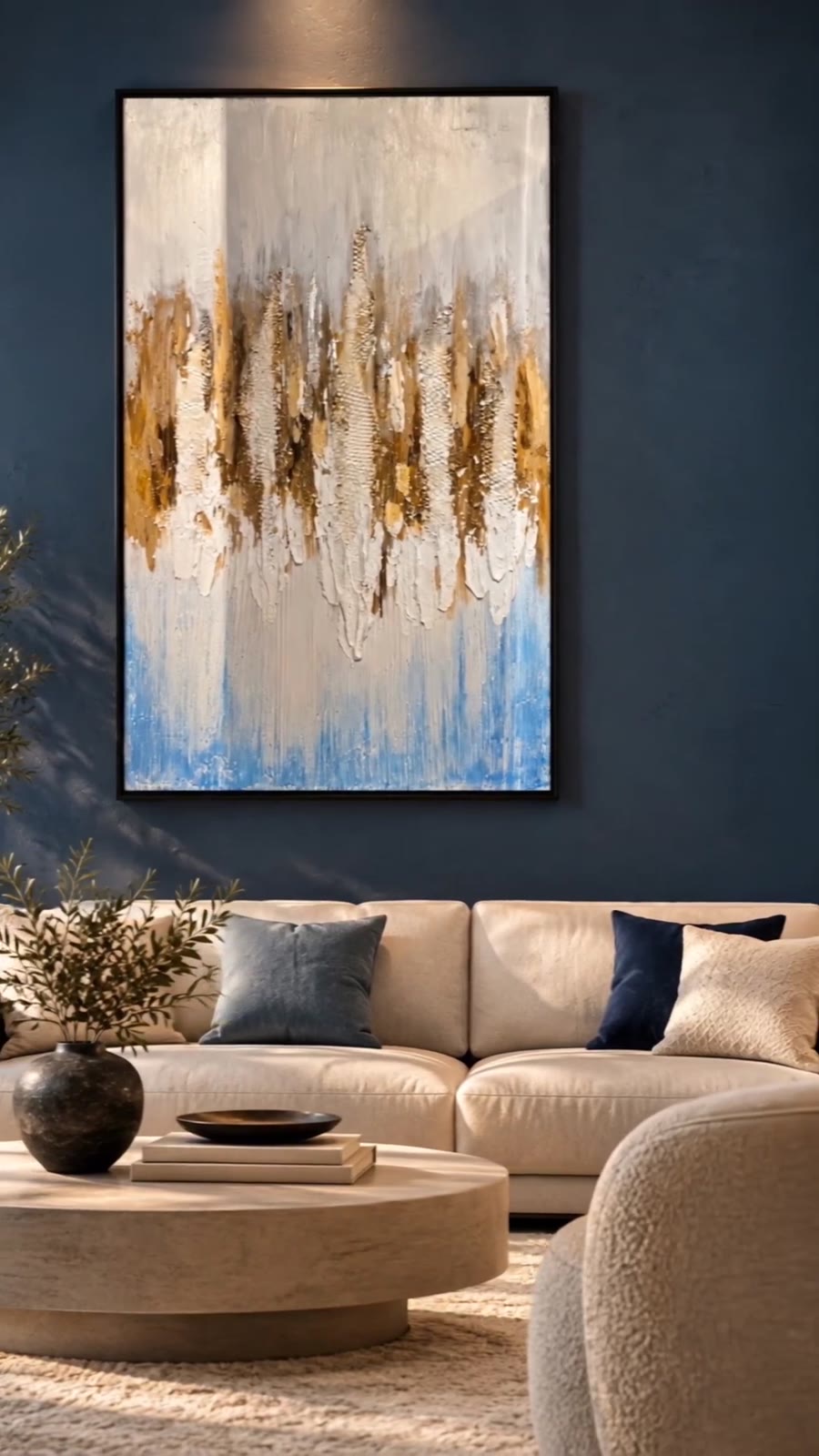
Gold leaf over pale blue on a deep navy wall, with cushions picking up both tones. The room is graded to the painting, not the other way round.
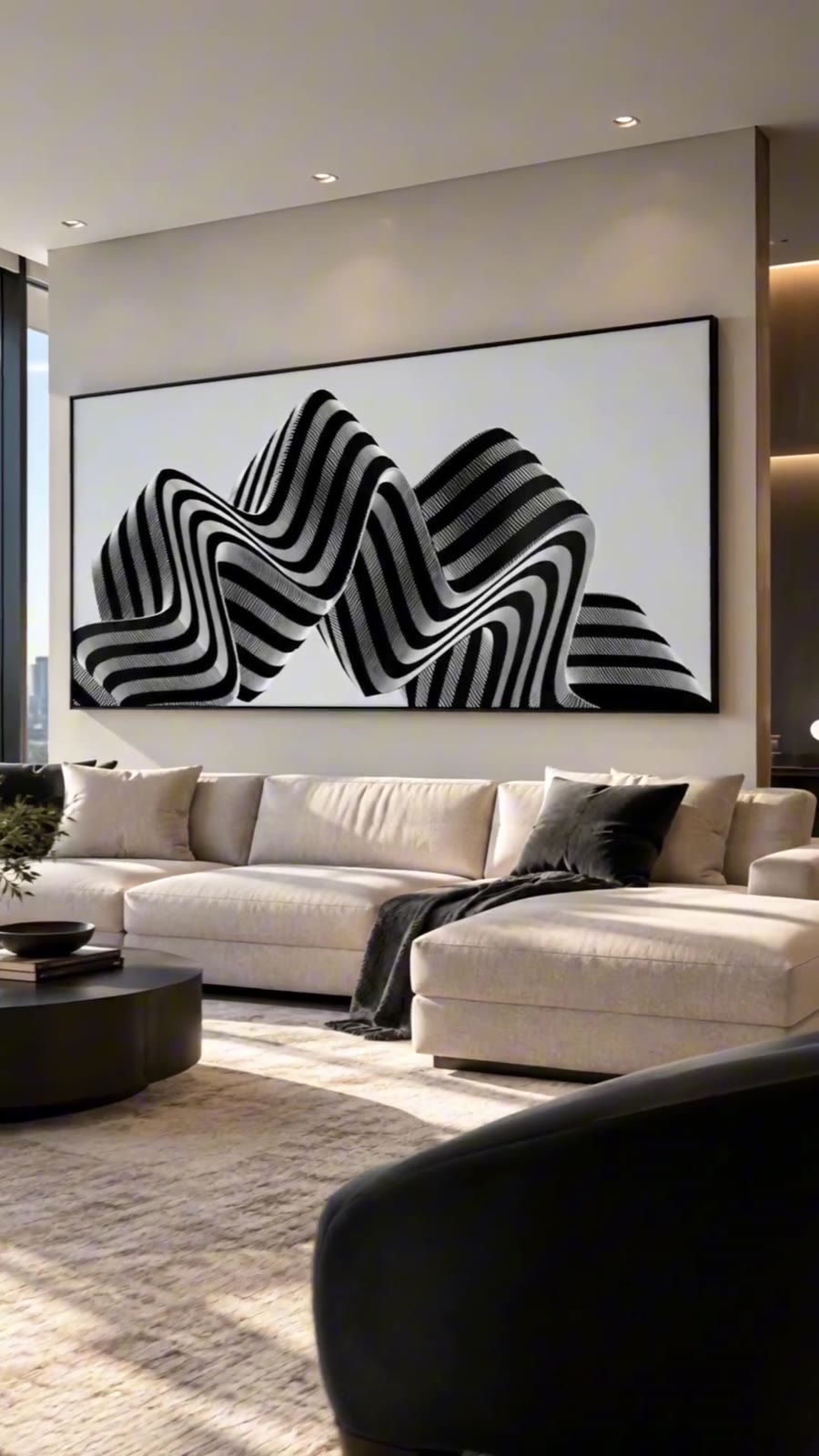
A black-and-white ribbon form stretched the full length of a sectional. The widest piece closes the walk, answering the question every buyer has: will it fill my wall?

Why it works
Five unrelated pieces in a static grid look like a store with no point of view. In one continuous walk they look curated. The motion through the walls is what ties them together.
Because each piece was photographed from the angle its room shot needed, the textures hold up as the camera pushes in. The relief, the gold leaf and the brushwork are the real surfaces.
The film
How it was made
No location, no crew, no shoot day beyond photographing the pieces themselves. Generative tools are a medium here, not the point. What you're paying for is the concept, the direction and the finish.
The route written first: which piece, which room, which angle, and how the camera passes from one into the next.
Each canvas photographed from the exact angle its shot required and prepared in Photoshop, so texture and colour stay true.
Five interiors and the walk-through transitions generated in Kling around the photographs, with the art itself left unaltered.
An original score composed in ElevenLabs, cut in CapCut to twenty-six seconds, with the offer held to the final beats.
More process
Eleven films for the same client, each solving a different problem.
See all the breakdowns →Start a project
If your catalogue is wide and your grid makes it look random, this is the format for it.
hello@thesurrealtheory.com