Process — Gilded Light
Hand-textured canvases filmed the way they're bought in person: first from the sofa, then from a few inches away, where the gold leaf and knife marks show why they cost what they do.
The brief
These are heavy, hand-built surfaces: raised gold flakes, palette-knife ridges, metallic leaf catching the light. Photographed straight on, they flatten into prints and lose the thing the buyer is paying for.
The film had to give each piece two readings at once: how it changes a room, and what it feels like up close.
The idea
Every piece gets a room and a macro.
A simple rhythm, repeated: establish the piece in a bright penthouse room, then push in until the surface fills the frame. The wide shot sells the space and the macro sells the craft.
Golden-hour light and fireplaces run through the whole film, so the metallic finishes always have something warm to catch.
The cut
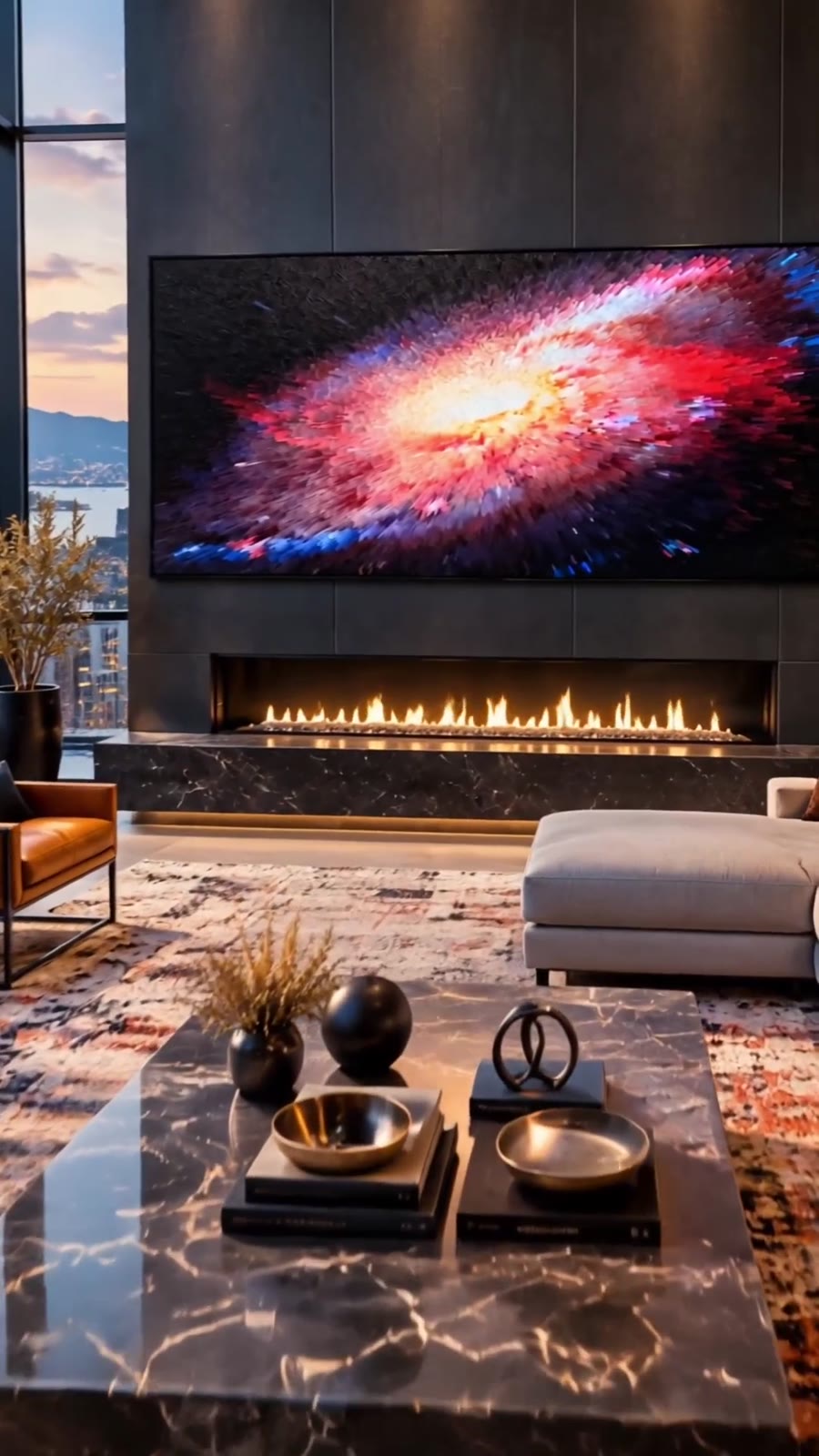
A wide galaxy canvas over a long linear fireplace, with the city going gold behind glass. The scale of the room sets the price bracket before any piece is singled out.
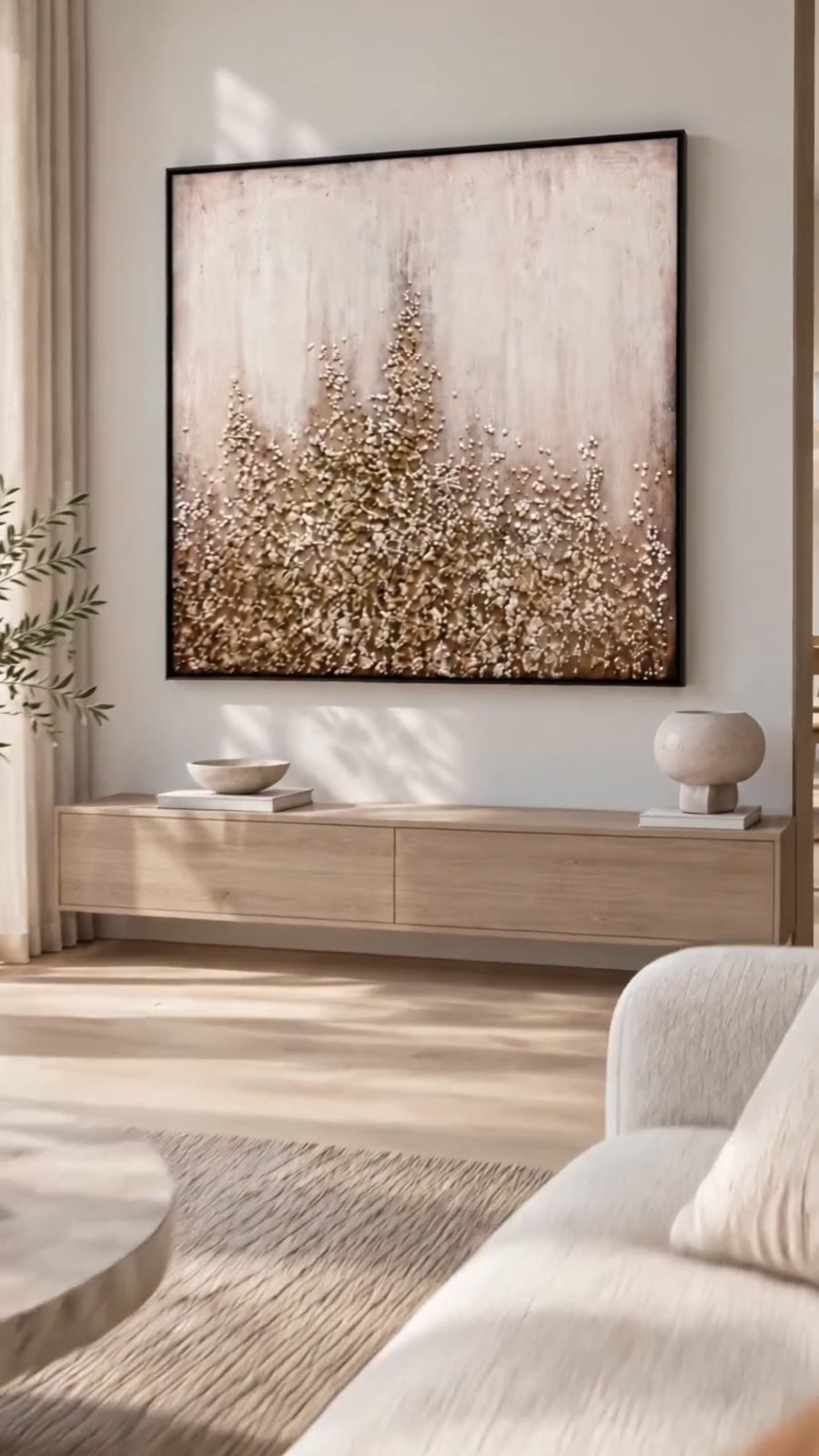
A cream canvas scattered with raised gold flakes, hung above a low console in soft daylight. From here it reads calm and expensive.
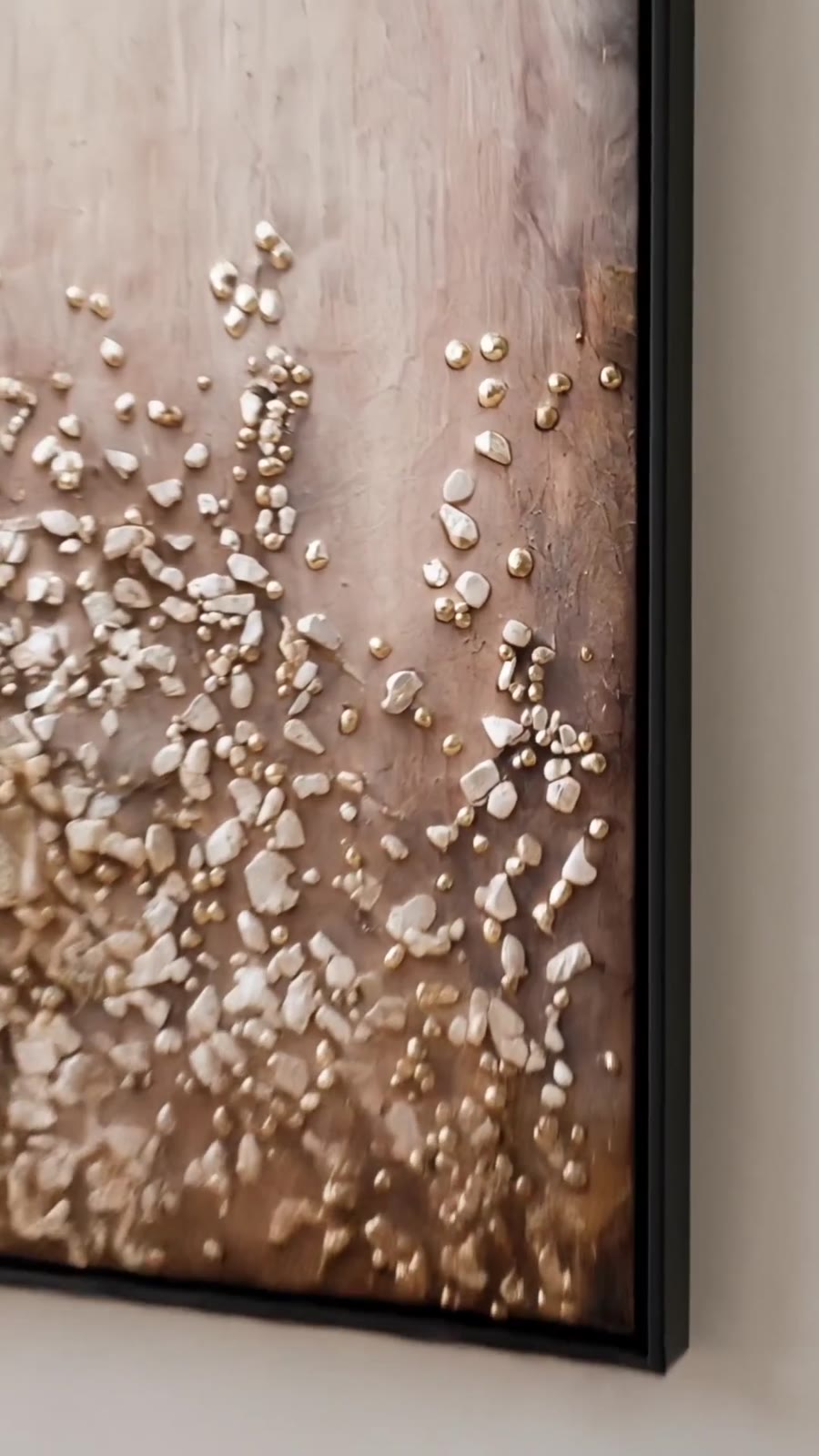
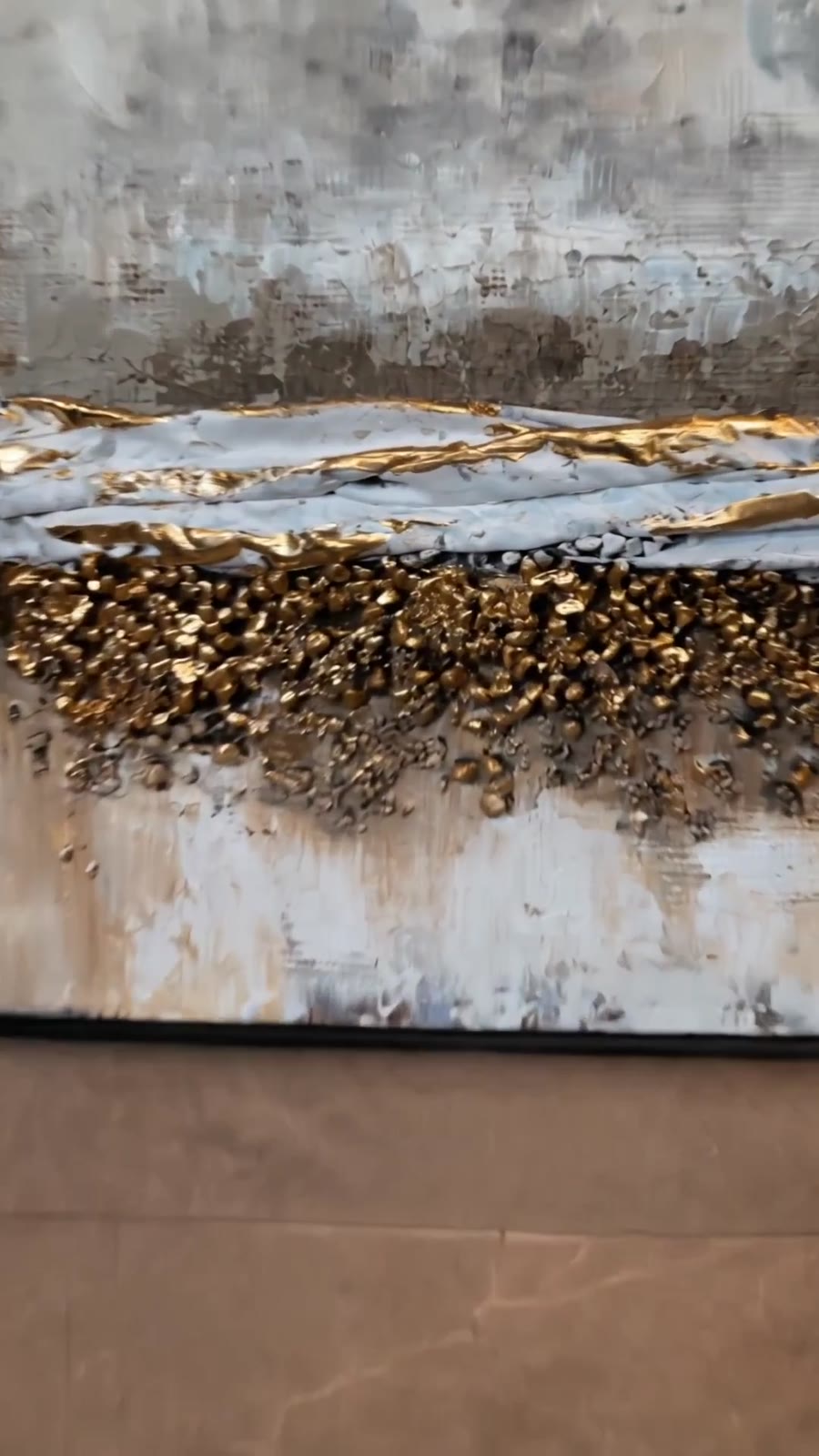
The push-in reveals what the wide shot hides: every flake is a separate raised piece throwing its own shadow. It's the moment a print stops being a comparison.
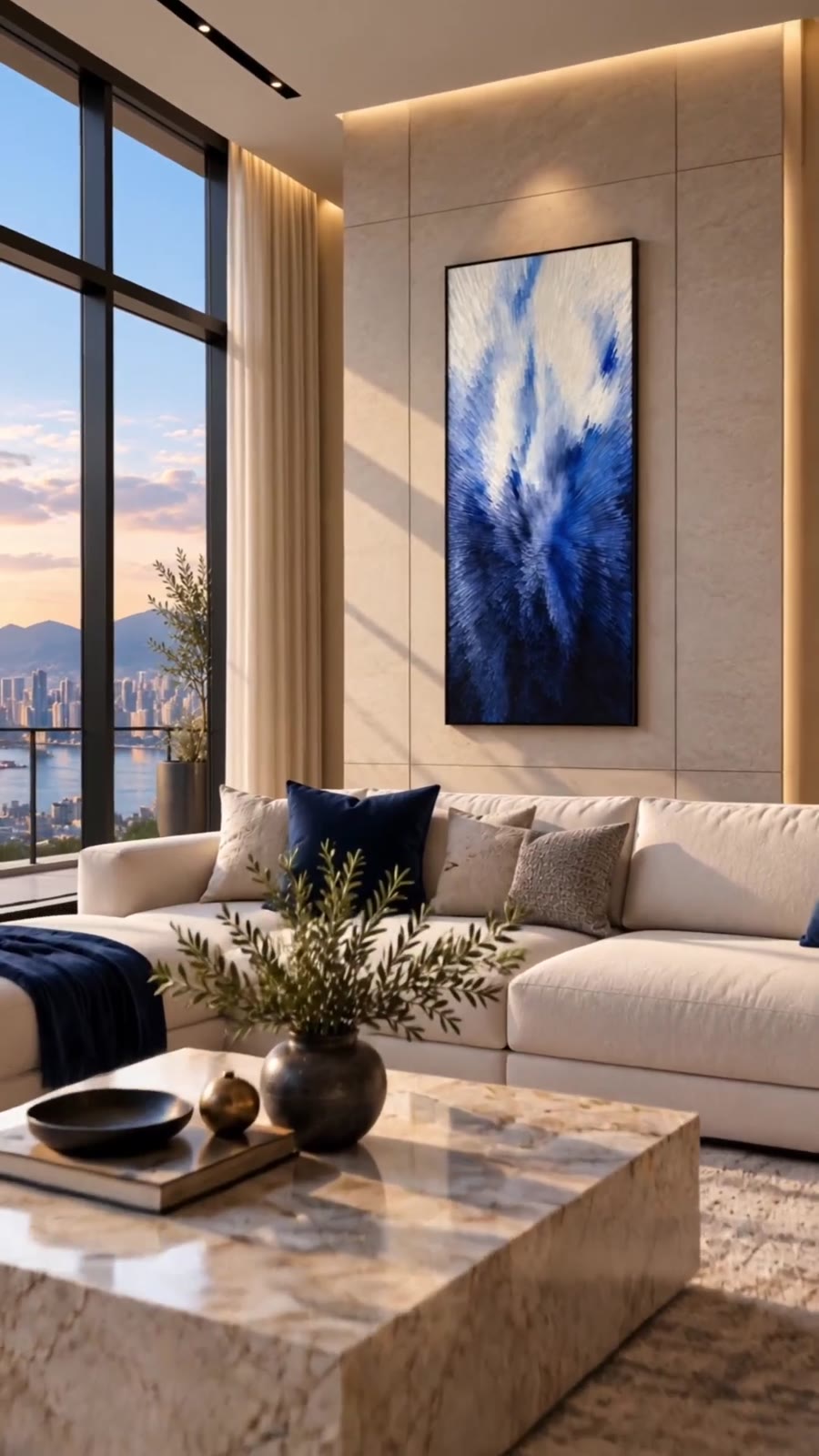
A deep blue burst above a linen sectional, with navy cushions pulling the colour into the room. It's the one cool note in a warm film, so it lands harder.
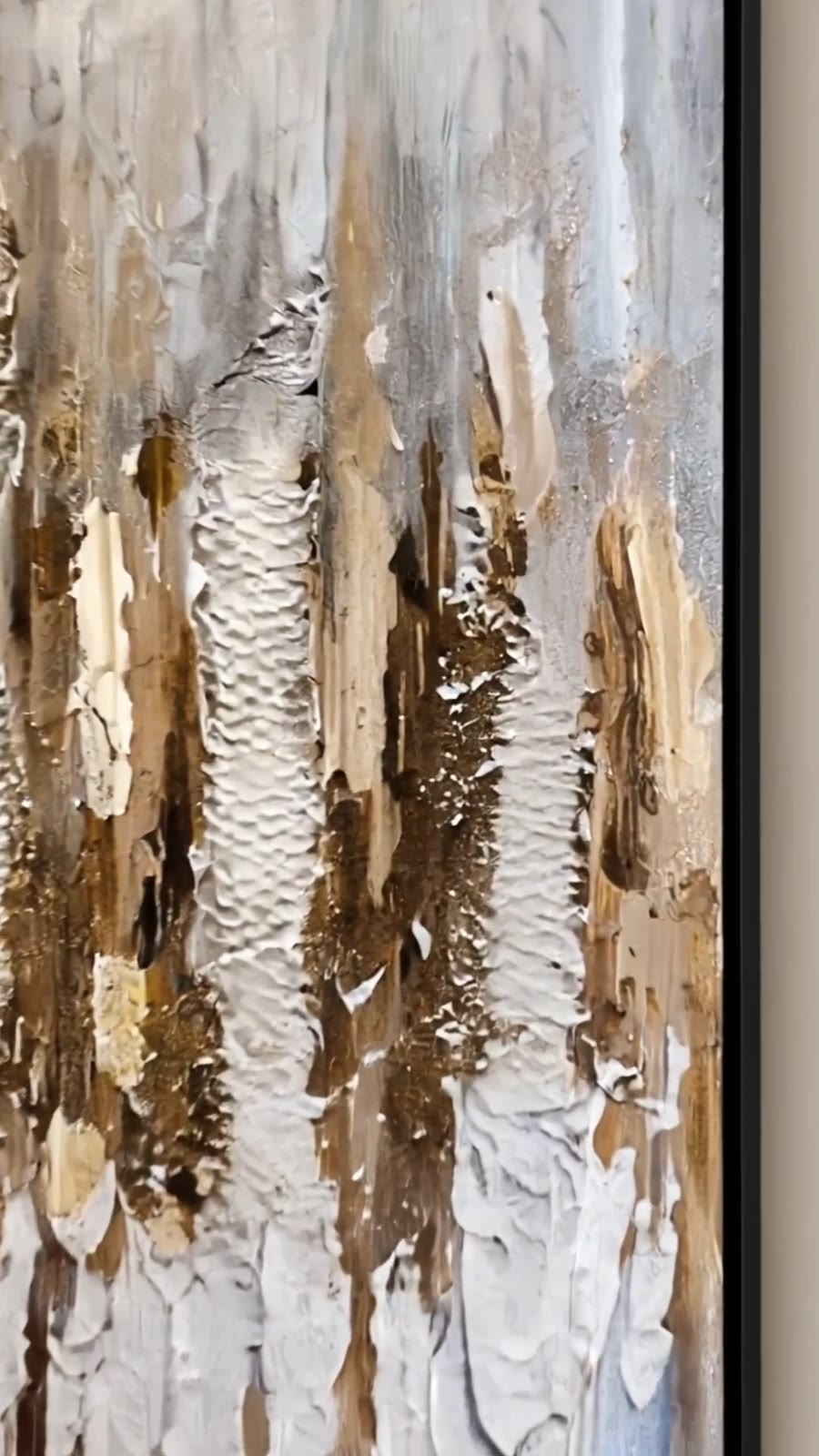
Gold leaf, white impasto and pale blue, shot close enough to see the palette knife's ridges. This frame does more for the price than any caption could.
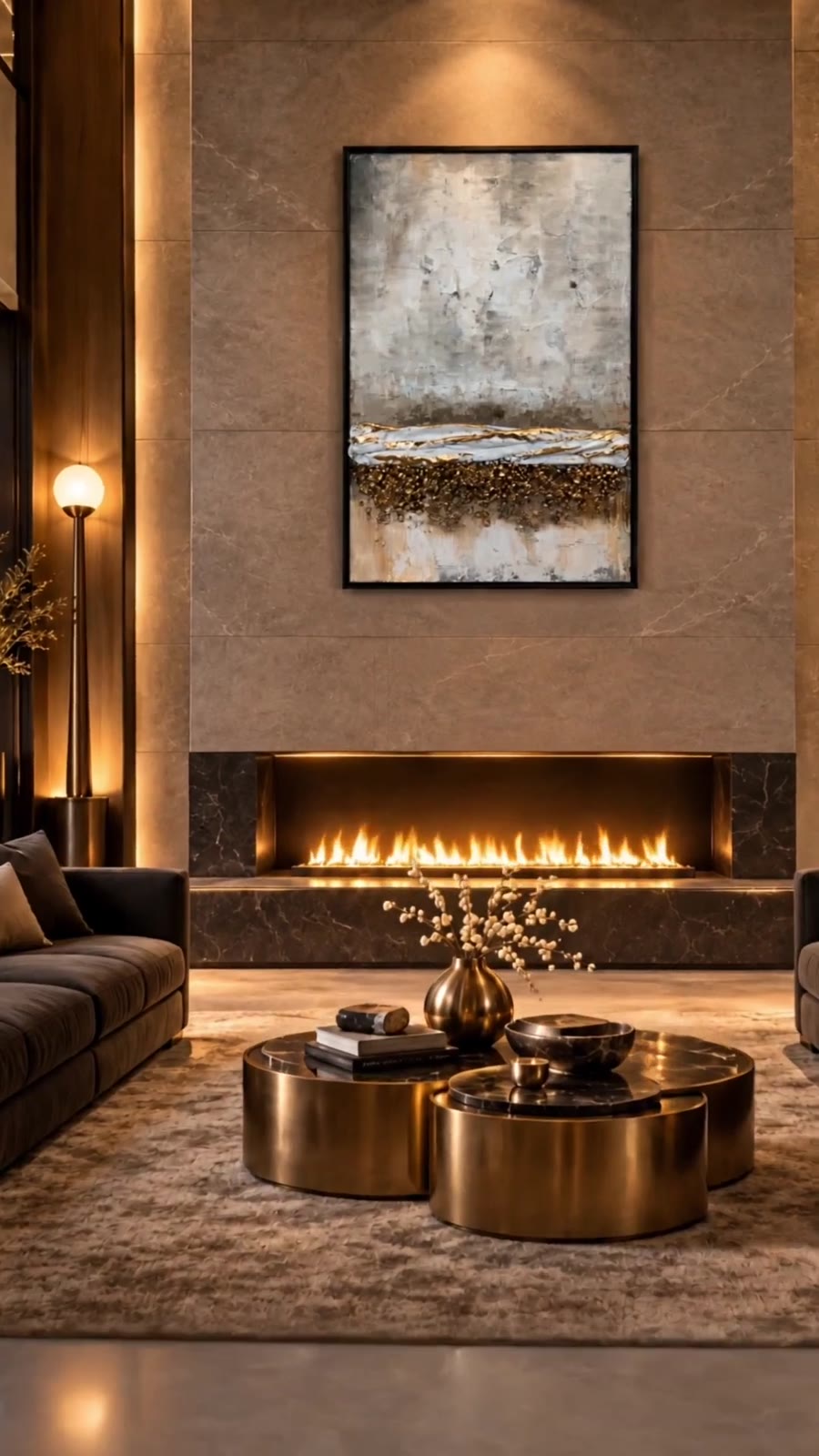
A grey canvas cut by a gilded horizon line, hung over a stone fireplace with brass tables below. The fire lights the gold, and the film ends where it started, by a flame.
Why it works
In a showroom, people walk up to textured art and lean in. Online they can't, so they assume it's a print and price it like one. The push-in does the leaning for them.
It only works because the surfaces are real. Each canvas was photographed at the angles the shots needed, so the texture in the macro is the actual texture on the wall.
The film
How it was made
No location, no crew, no shoot day beyond photographing the pieces themselves. Generative tools are a medium here, not the point. What you're paying for is the concept, the direction and the finish.
The room-then-macro rhythm planned shot by shot, with the light and the order of pieces set before generation.
Each canvas photographed wide and close from the exact angles required, then prepared in Photoshop to keep texture and colour faithful.
Penthouse interiors, golden-hour light and the camera moves generated in Kling around the photographs, with the art itself left unaltered.
An original score composed in ElevenLabs, cut in CapCut to twenty-six seconds and timed so each push-in lands on the music.
More process
Eleven films for the same client, each solving a different problem.
See all the breakdowns →Start a project
If your work only makes sense up close, send us your photos. We'll build the room and bring the camera in.
hello@thesurrealtheory.com