Process — Maison Collection
Leather trays in matte and pebble grain, on polished gold and silver feet. Photographed empty they are a shape. The film's whole job was to give them a use.
The brief
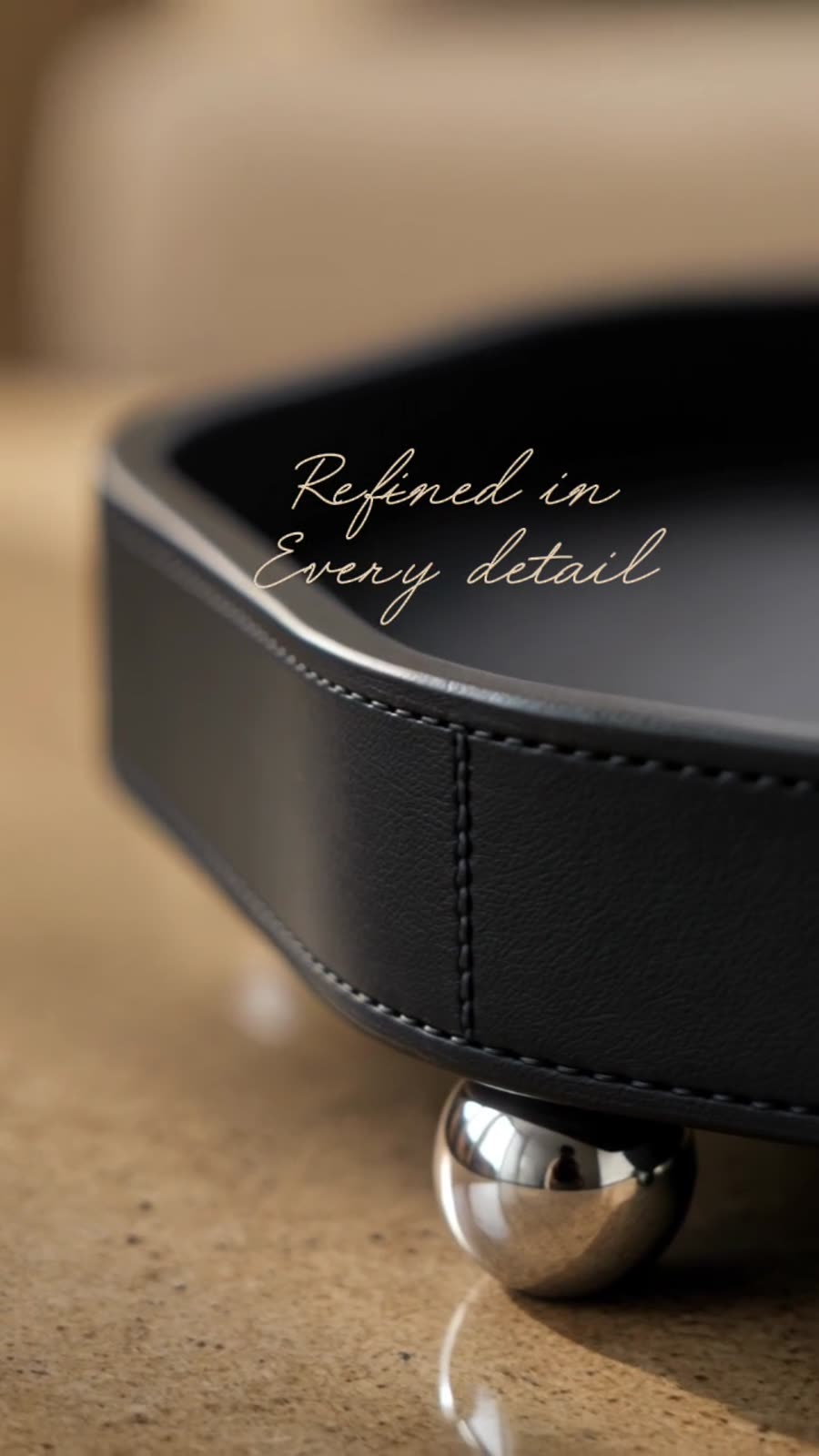
The stitch line. The grain of the leather. A polished metal ball under each corner. On a product page at thumbnail size, none of it survives — and a tray without those details is a tray from anywhere.
The second problem is scale. Nobody can tell a small from a large in a photograph on a white background, and the collection is sold in both.
The idea
Show the detail. Then show the job.
Each tray gets two shots. First a macro close enough to read the stitching and the metal feet. Then the same piece in a room, holding something real — car keys and sunglasses by the door, a candle on a console, rings on a nightstand.
The objects do the measuring. You know how big a set of keys is, so you know how big the tray is, without a single dimension on screen.
The cut
The first frame is closer than any product photograph would ever be — one corner, one seam, one chrome ball catching the light off travertine. It sets the standard the rest of the film is judged at.

The same tray on a styled console, holding a candle. Books and a vase around it for scale. This is the shot a buyer mentally places in their own hallway.
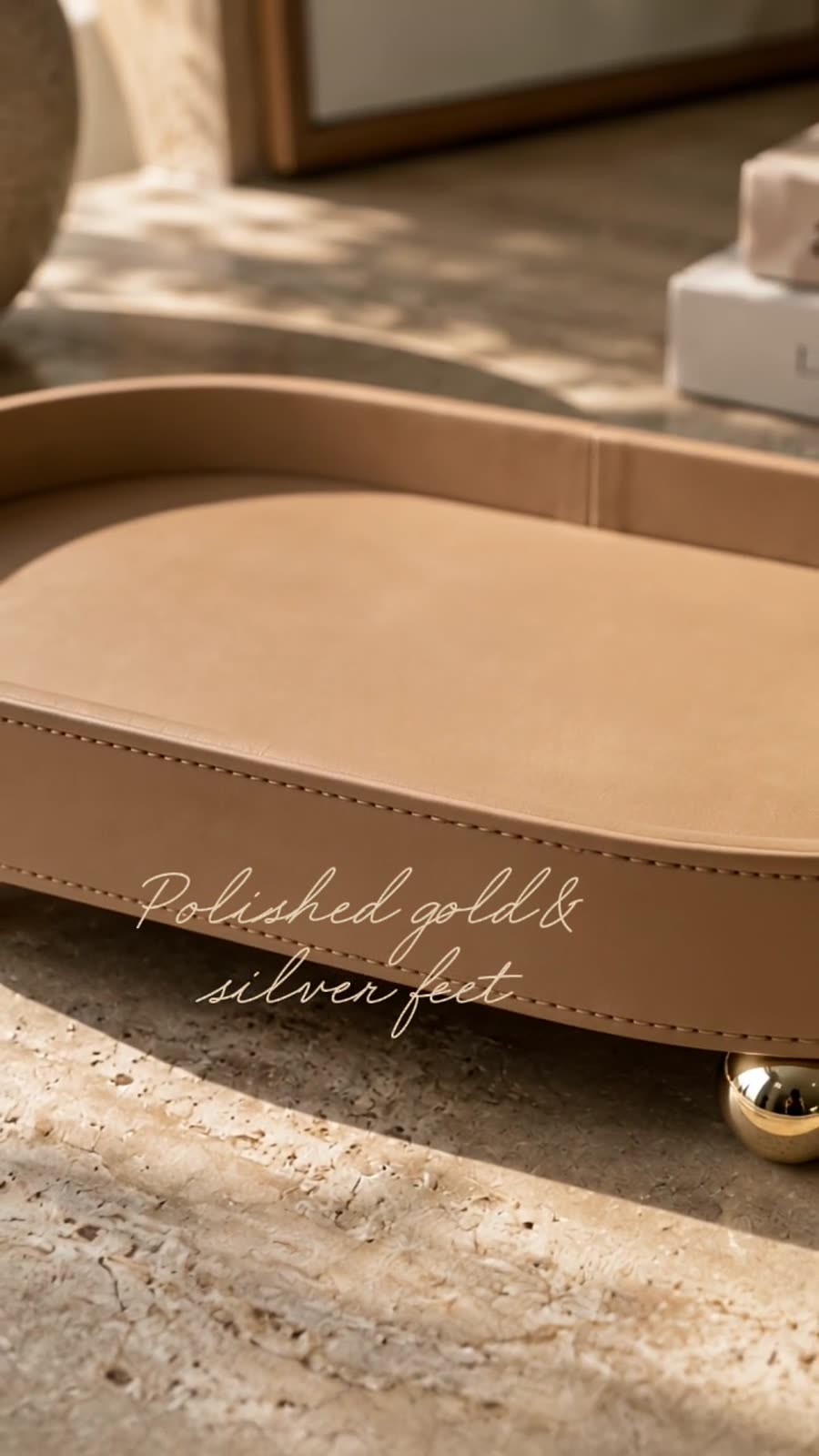
Tan, and low enough to put the gold feet on the horizon line. The repeated framing is what makes four finishes read as one collection rather than four products.

Keys and sunglasses answer size, purpose and where it lives in one image. It is the least glamorous shot here and probably the one that sells the piece.
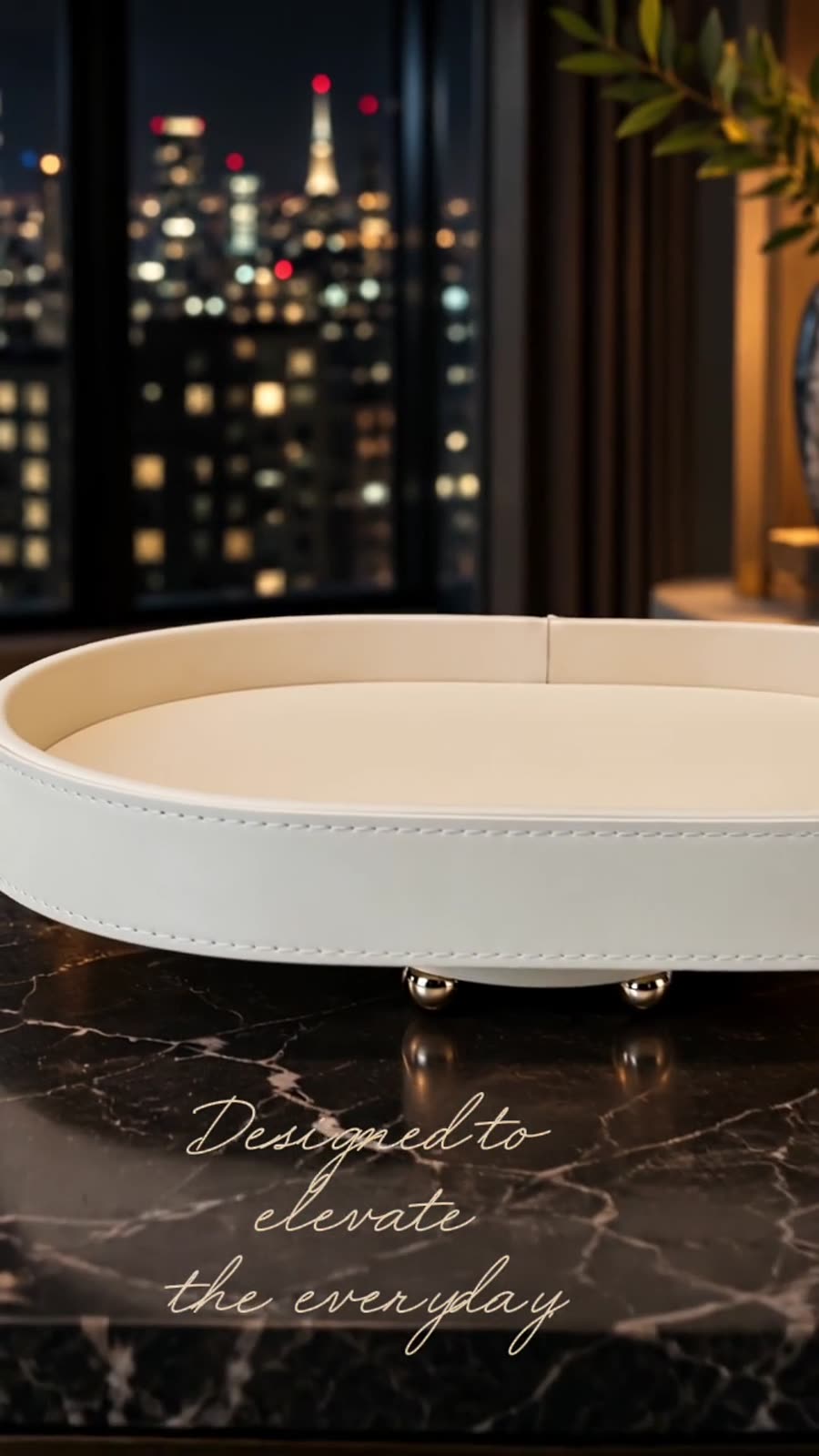
The film turns here — daylight travertine gives way to dark marble and a city skyline. Same collection, a different hour and a different kind of room.
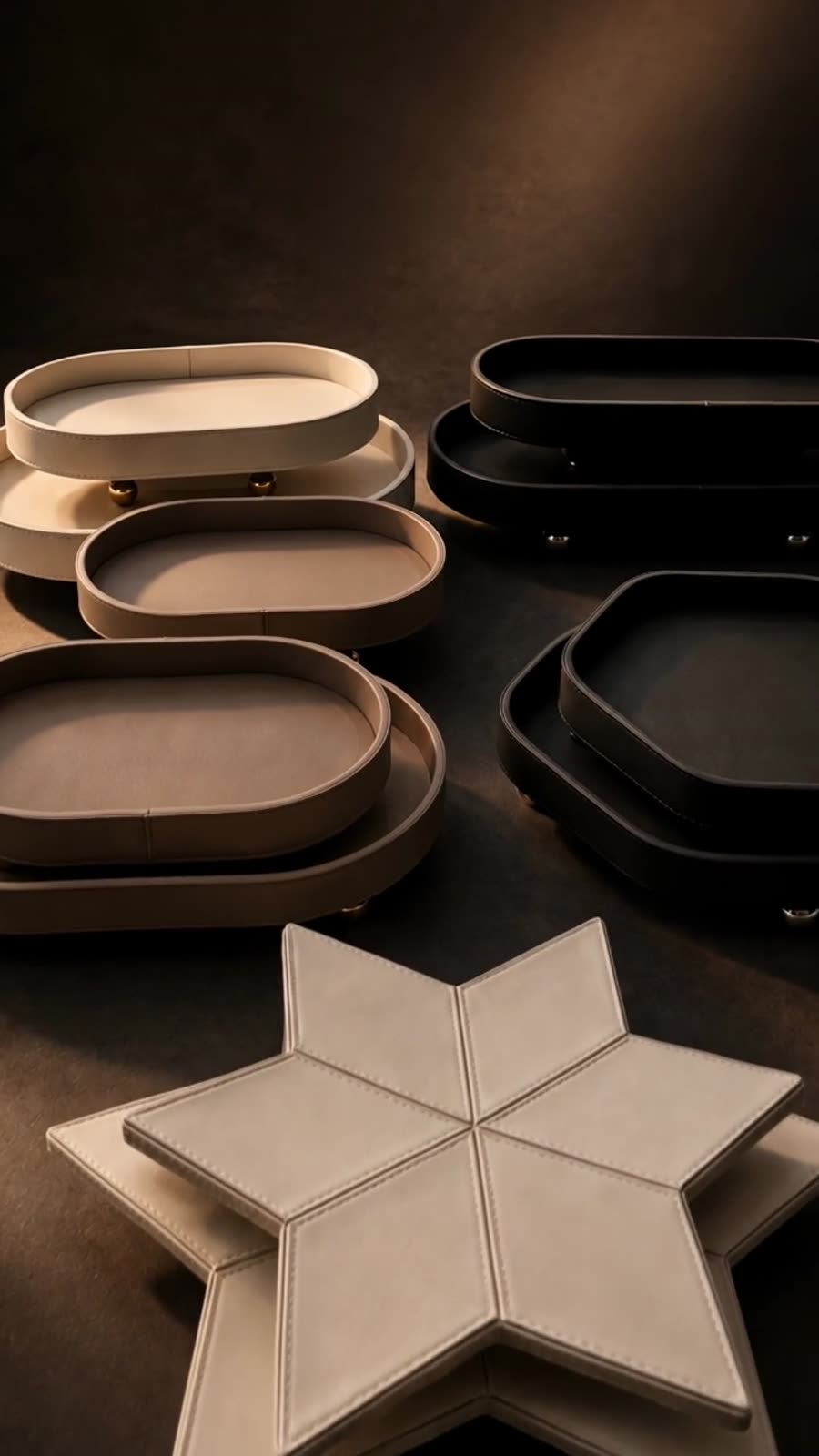
The closing shot pulls every shape and finish into one frame, including the star tray held back until now. After thirty seconds of single pieces, this is what makes it a collection.

Words on screen
Some things are quicker to say than to shoot. The differences between matte and pebble grain, or gold and silver feet, are almost impossible to read at scrolling speed — so they get written, in script, over the frame that shows them.
Refined in every detail
Polished gold & silver feet
Designed to elevate the everyday
Three lines across thirty-five seconds. Any more and it stops being a film and starts being a slideshow with captions.
Light and surface
Soft even lighting flattens grain — the exact thing the collection is sold on. So the film uses raking daylight across travertine in the first half and directional lamplight on marble in the second, both angled to throw the stitching and the grain into relief.
The palette stays inside the product's own range: bone, tan, ivory and black, against stone and dark wood. The only bright thing in any frame is the metal.
The film
How it was made
Every frame was built from product photography the brand already owned. Nothing was rented, nothing was styled on location, and nobody flew anywhere. That is the whole reason a small brand can afford a film that looks like this.
Generative tools are part of how it gets made. They are a medium, not the point — what you are buying is the concept, the direction and the finish.
Existing photography of each finish and silhouette, plus the real sizes, so a small never gets shot as a large.
Every tray assigned a detail shot and a job — keys, a candle, rings — chosen because everyone already knows how big those things are.
Surfaces and rooms built around each piece, then graded to one palette so daylight and night read as the same film.
Edited vertical, three script lines set over the frames that need them, and closed on the full collection.
More process
Tree Collection had the opposite brief — pieces too large and too textured to photograph, rather than too small.
Tree Collection — how it was made →Start a project
If your collection lives or dies on detail that a product page cannot carry, this is the format for it.
hello@thesurrealtheory.com