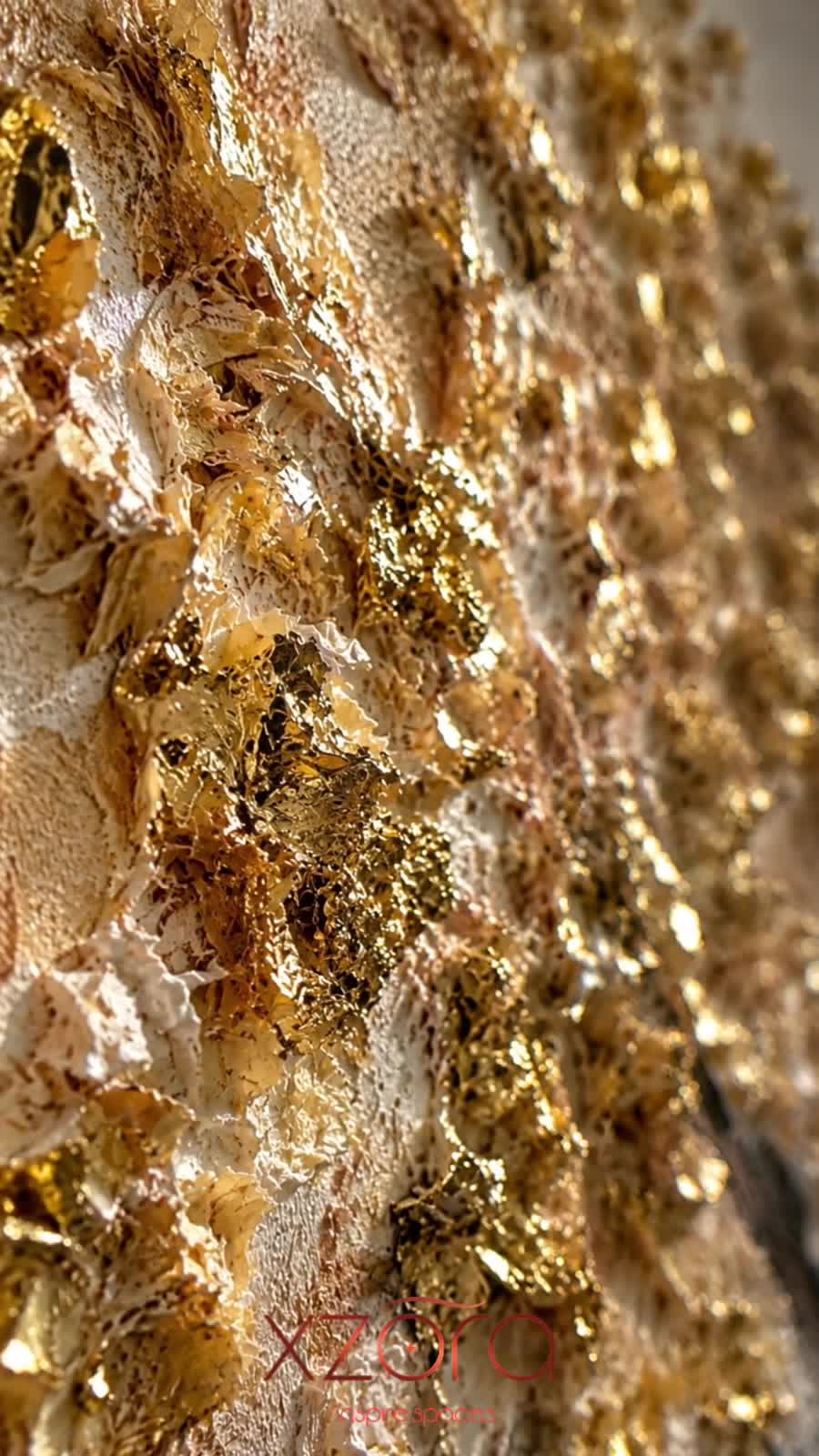
Process — Tree Collection
A collection of textured tree reliefs for XZORA Livings — built as a film because the thing that sells them is the thing a catalogue photograph cannot carry.
The brief
Gold leaf, brushed silver, raised plaster. Standing in front of one, the relief catches light and moves as you move. Photographed flat and cropped to a grid square, all of that disappears — and four distinct treatments collapse into four pictures of a tree.
The film had one job: give the surface back its depth, and give the piece back its scale.
The idea
Close enough to touch. Far enough to place.
The film never settles at product-photo distance. It cuts between two extremes — a macro pass close enough to read individual leaves, then a full room where the same piece hangs at real size. Texture, then scale. Texture, then scale.
Each return to a room is a different room, so the loop doubles as the argument: this collection works in an office, a lounge, a penthouse, a bright residential wall.
The cut
The first frame is unreadable as a product — just gold catching light across a raised surface. It buys three seconds of attention before anyone knows what they are looking at.
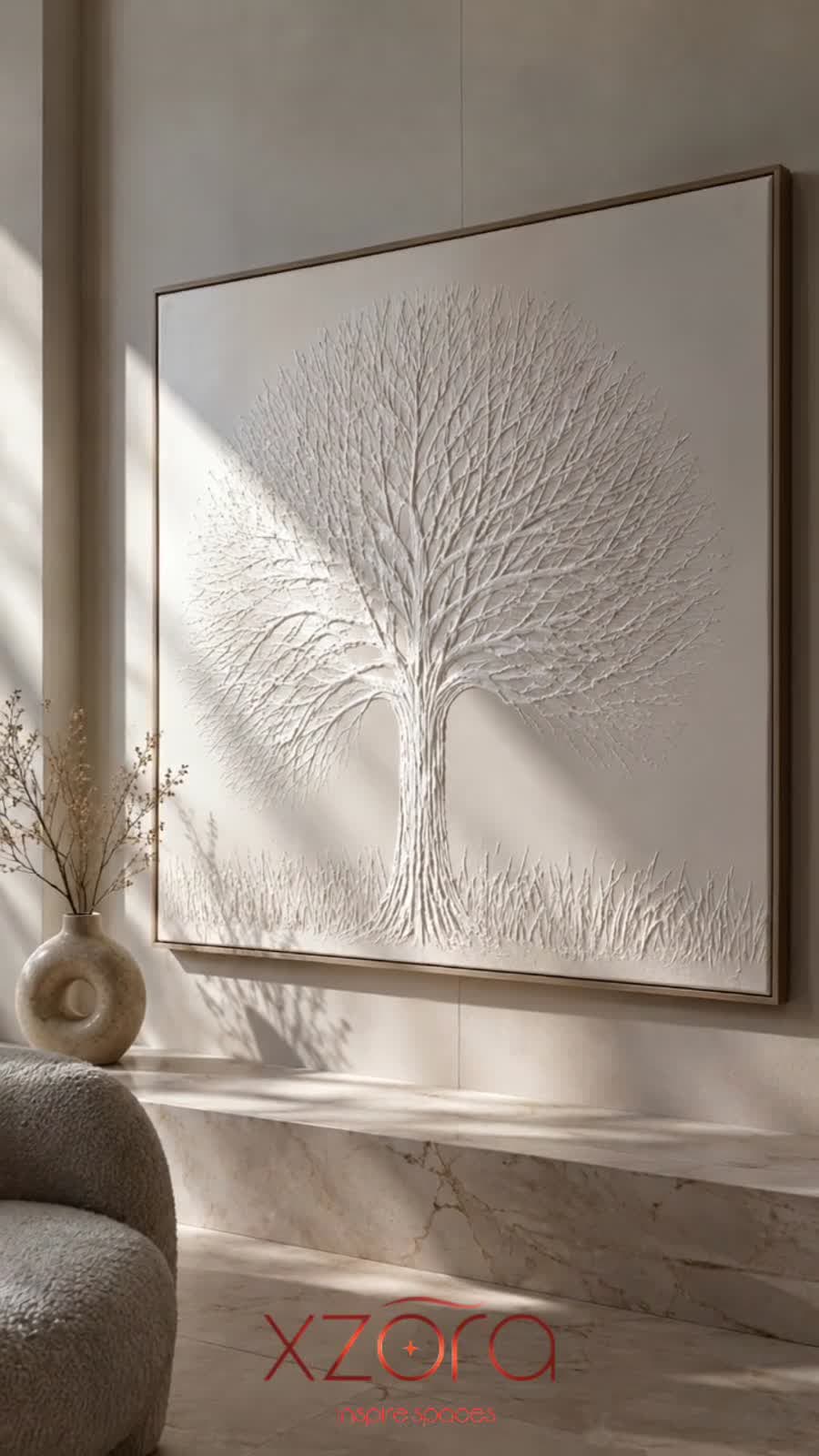
Hard afternoon light across plaster, the piece throwing its own shadow. This is the reveal of scale — and the only daylight beat in the film, placed early so everything after it can go warmer and darker.
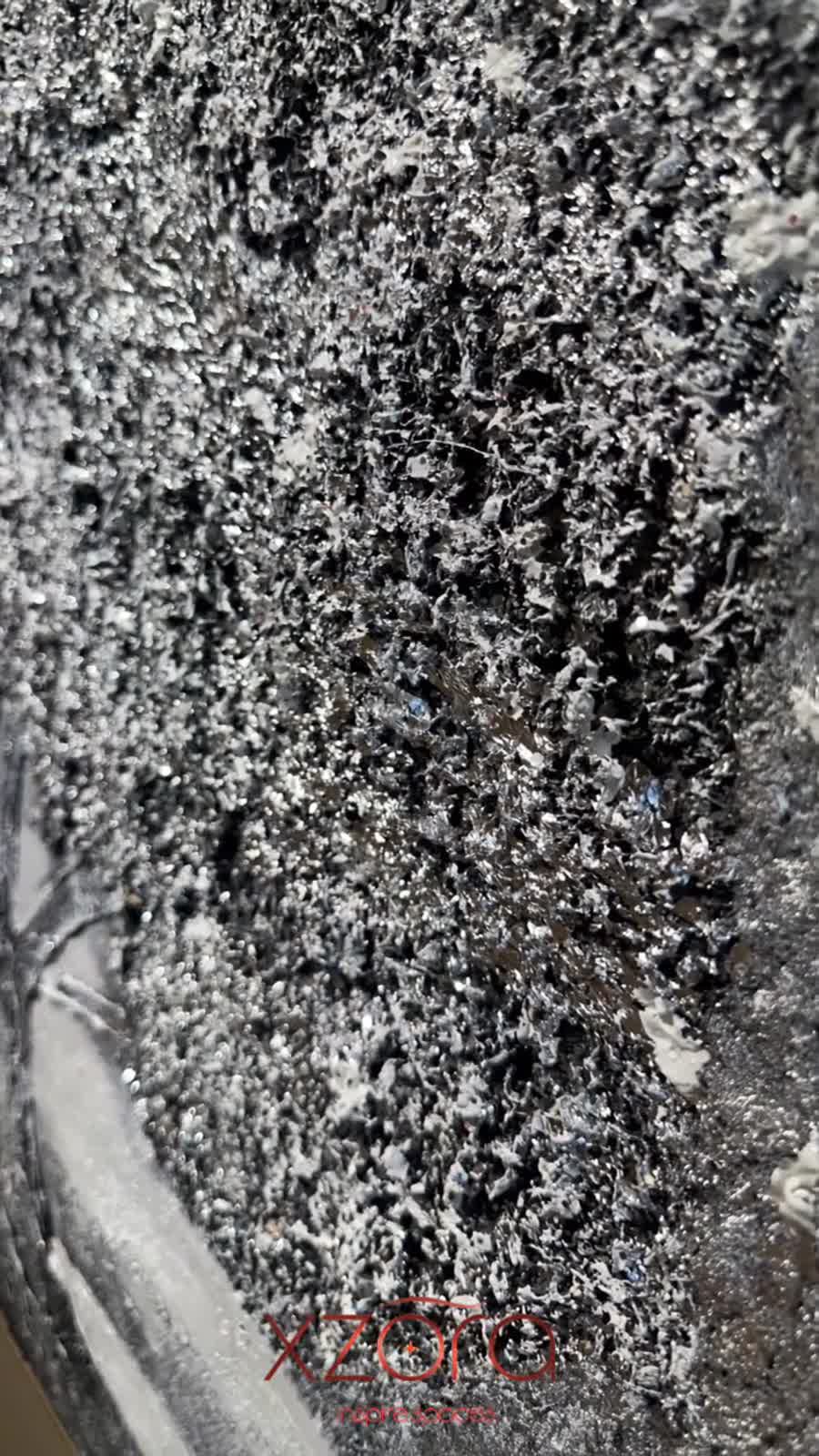
Same distance, same movement, different finish. Repeating the framing is what makes the collection read as a collection rather than four unrelated pieces.
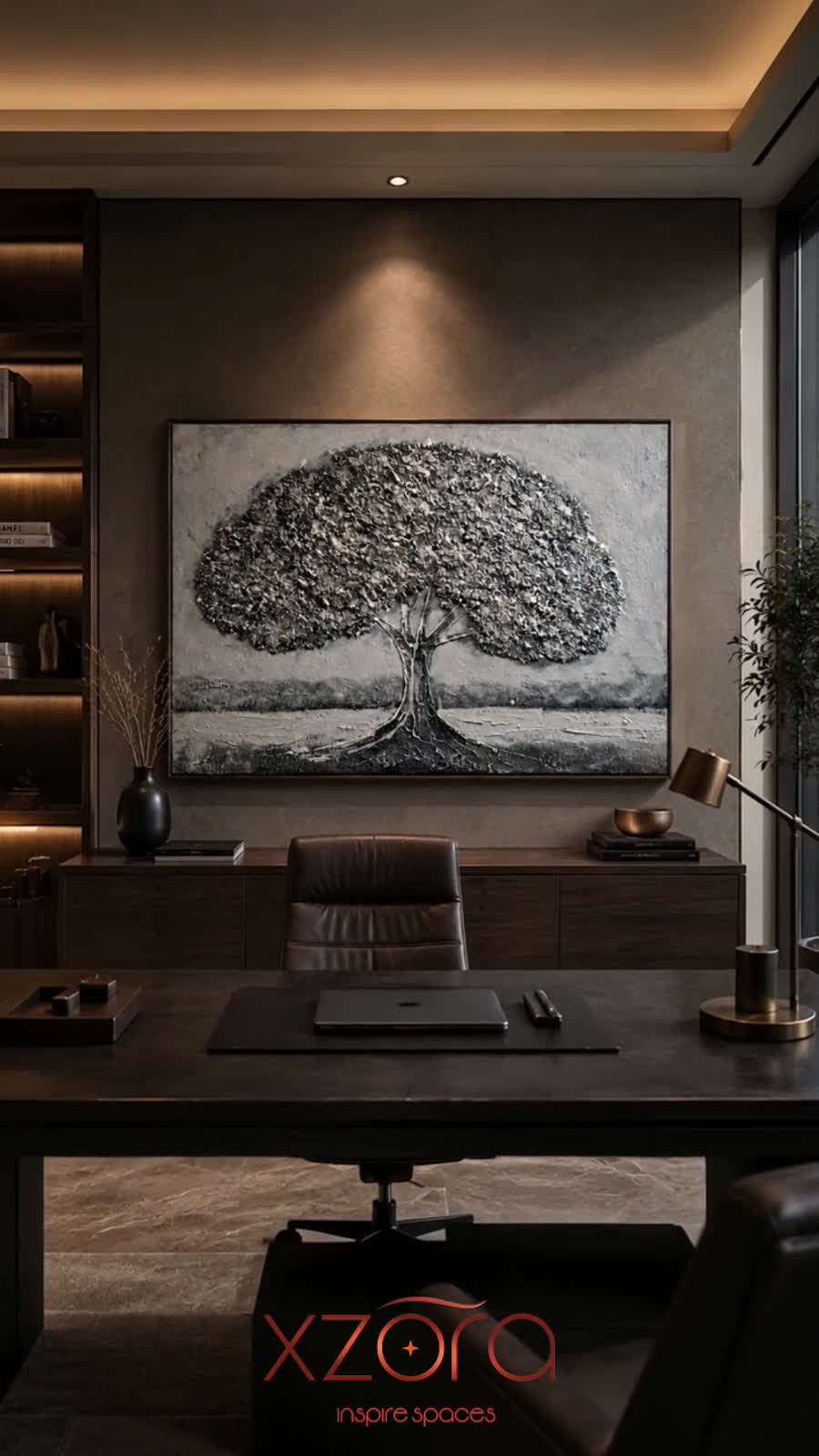
Warm shelf lighting, walnut, a desk. The piece is the brightest object in the frame and the only thing with texture — everything else in the room is flat by comparison.
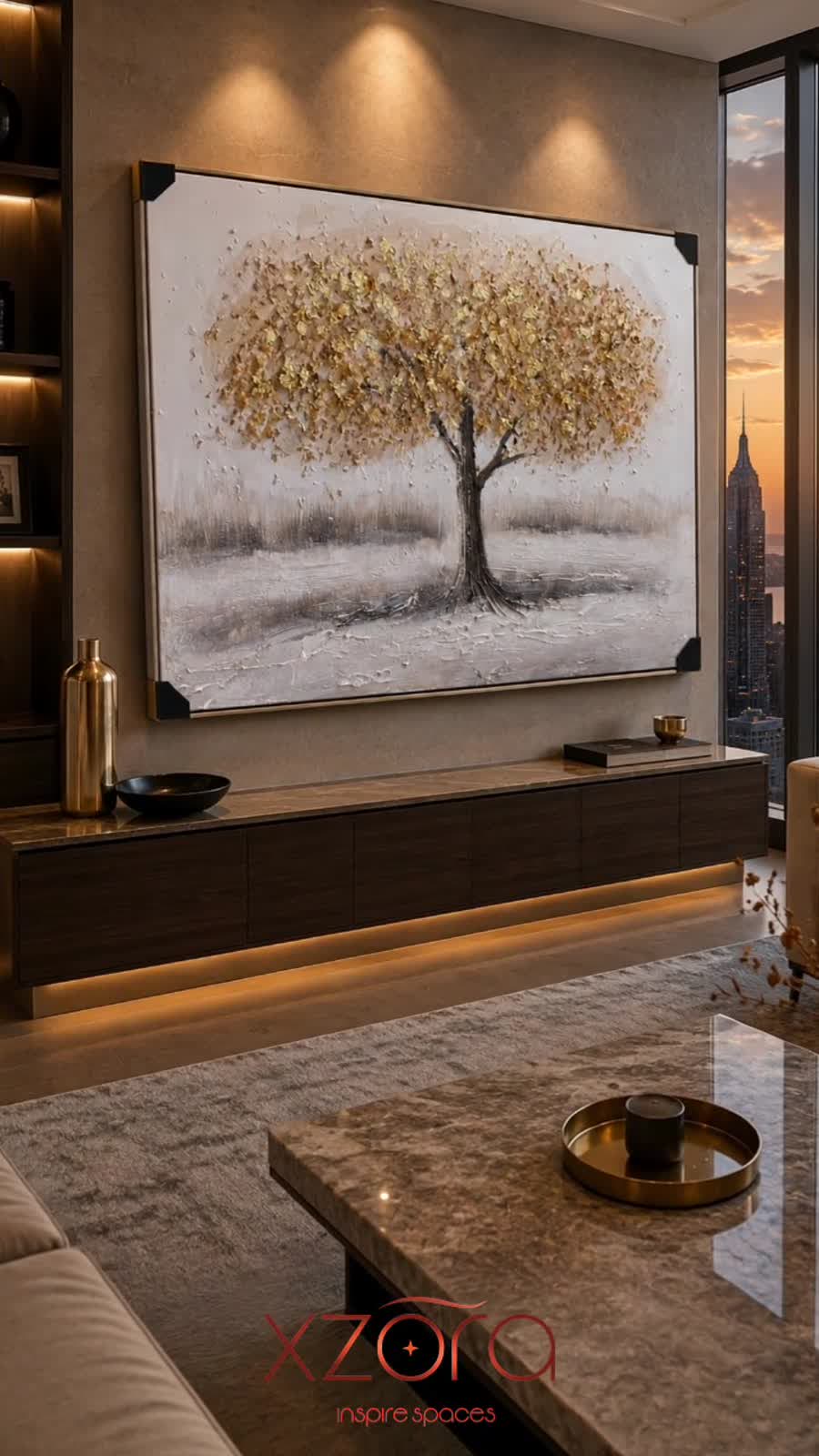
Skyline through glass at last light, the gold piece picking up the same colour temperature as the window. Held longer than any other room — this is the aspirational beat and it is allowed to breathe.
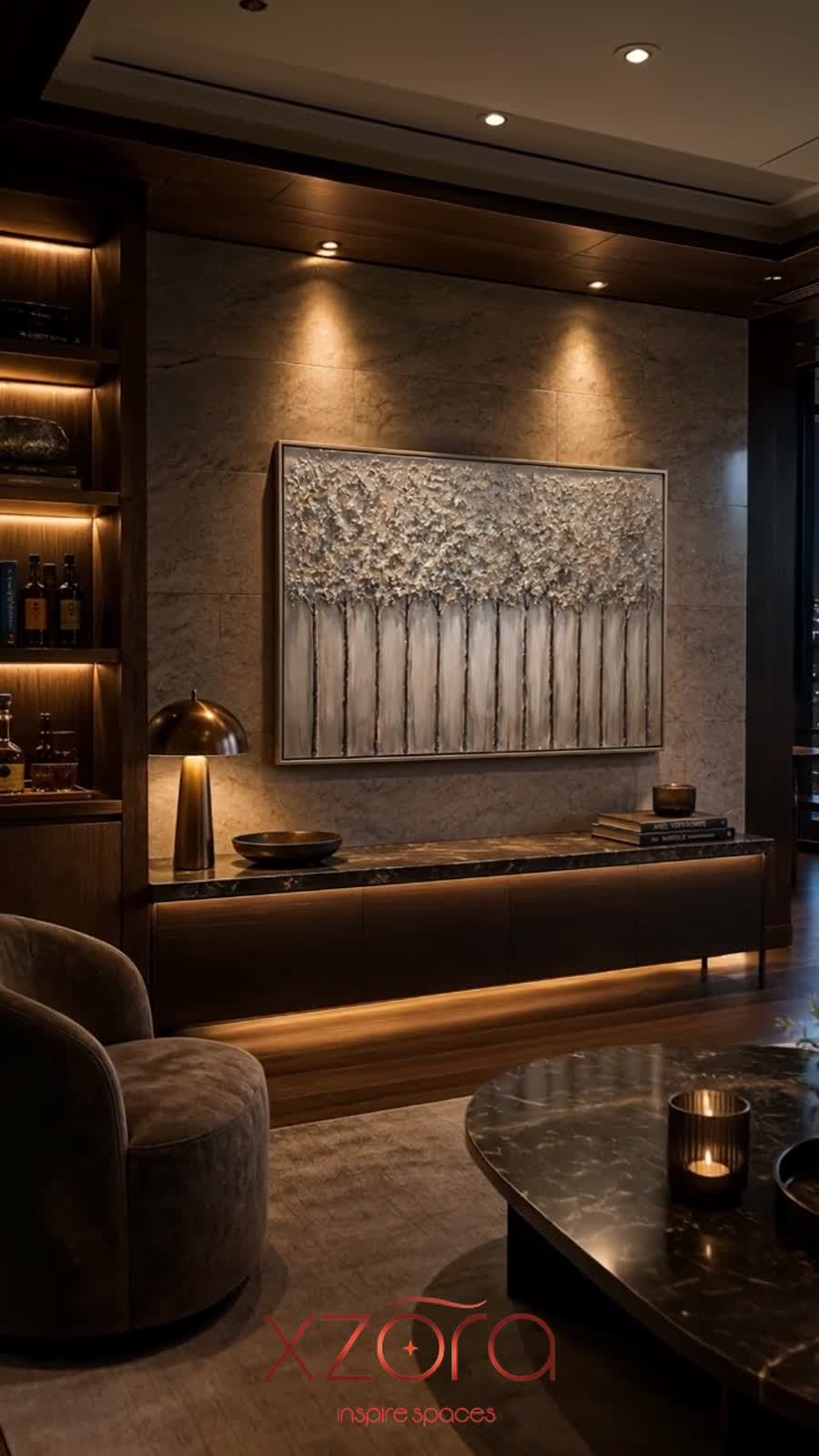
The last room is the most furnished — chairs, table, lamplight — so the film ends on the piece doing its actual job: finishing a space someone already lives in.
Light and colour
Colour is held near-neutral throughout so the metals carry it. What moves instead is temperature: daylight plaster at the top, warm interior light through the middle, dusk gold at the peak, lamplight at the close. The subject never changes, so the light has to do the arc.
Sound
The music was built to the edit so the swells land on the room reveals rather than running underneath them. A library track would have fixed the film to the month it was posted; a scored one lets it stay in rotation.
The film
How it was made
Every frame was built from product photography the brand already owned. Nothing was rented, nothing was styled on location, and nobody flew anywhere. That is the whole reason a small brand can afford a film that looks like this.
Generative tools are part of how it gets made. They are a medium, not the point — what you are buying is the concept, the direction and the finish.
Existing photography of the four pieces, plus their real dimensions so scale in every room stays honest.
The macro-to-room alternation, the four environments, and the temperature arc — locked before a single frame is generated.
Environments built around each piece, then graded to one palette so eight separate beats read as one film.
Edited vertical from the first frame rather than cropped down, scored to the cut, delivered ready to post.
More process
Maison Collection had the opposite brief — pieces too small and too detailed to photograph, rather than too large.
Maison Collection — how it was made →Start a project
If you have a collection that photographs flat, this is the format for it. Send the name, a link, and what you want someone to feel.
hello@thesurrealtheory.com